


The Nigeria Deposit Insurance Corporation (NDIC) has advised the public to ensure their Bank Verification Number (BVN) is properly linked to their accounts to enable prompt payment of insured deposits in the event of a bank closure.
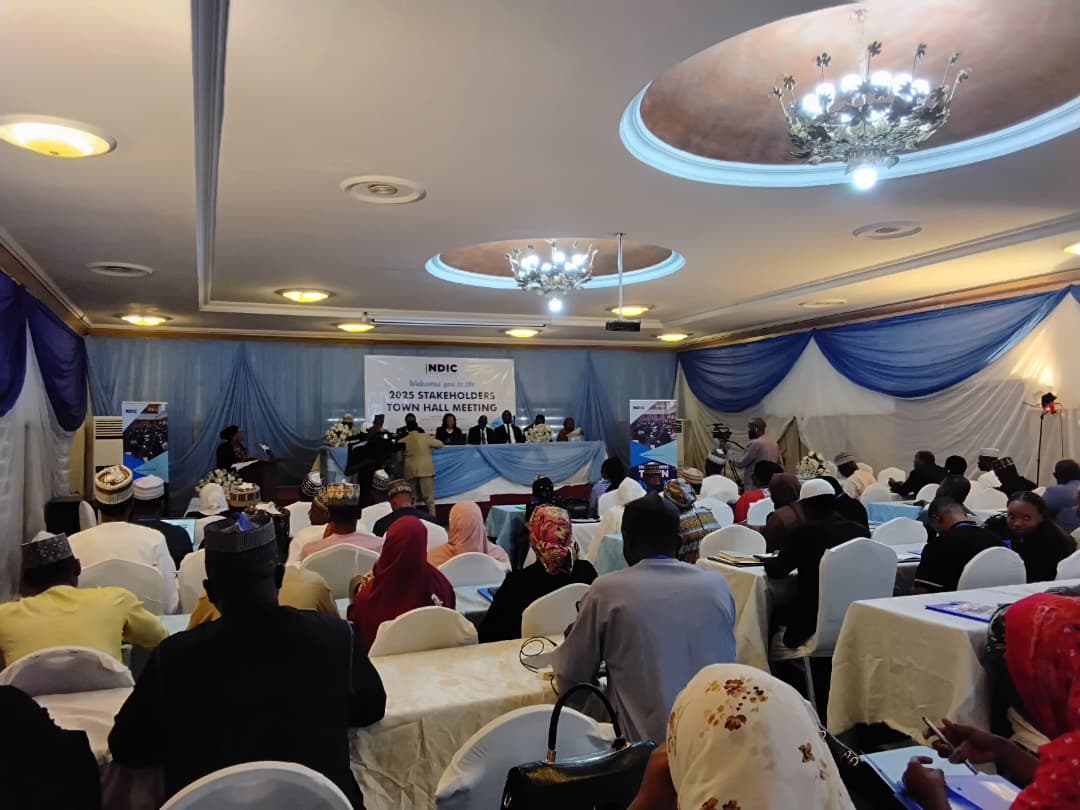
The Executive Director, Corporate Services, NDIC, Mrs. Emily Osuji, made the call during her keynote address at the NDIC Stakeholders’ Town Hall Meeting held in Kano.
Read also: Speaker Commissions Soba Projects to Boost Education, Healthcare
₦7.7bn Telecom Cyber Heist Uncovered as Police Smash Syndicate
Mrs. Osuji explained that the town hall forum forms part of the Corporation’s renewed efforts to deepen stakeholder engagement, address misconceptions surrounding the Deposit Insurance System (DIS), and strengthen public confidence in Nigeria’s banking sector.
She noted that many depositors still lack clarity on the scope of deposit insurance coverage, procedures for reimbursement following the revocation of a bank’s licence, and the steps customers should take when a bank is closed.

“This forum provides us the opportunity to clarify these issues in practical terms and empower depositors with knowledge of how their funds are protected and how reimbursements are carried out,”
Osuji reaffirmed NDIC’s statutory mandate, which includes deposit guarantee, bank supervision, distress resolution, and bank liquidation, stressing the Corporation’s commitment to protecting depositors’ funds and maintaining stability in the financial system.
Heritage Bank:NDIC Urges Those Yet to Receive Reimbursement to Come Forward
Read also: Affordable Housing: FG Advances 10,000 Units Across Nigeria
She highlighted the increase in maximum deposit insurance coverage approved in 2024, stating that depositors of Deposit Money Banks, Mobile Money Operators, and Non-Interest Banks are now insured up to ₦5 million, while customers of Microfinance Banks, Primary Mortgage Banks, and Payment Service Banks are covered up to ₦2 million.
According to her, the enhanced coverage protects about 99 percent of depositors, particularly small savers, and supports financial inclusion efforts nationwide.
Mrs. Osuji also disclosed that NDIC has significantly improved its payout processes, citing the prompt settlement of insured deposits to customers of defunct Heritage Bank Limited, Union Homes Plc, and Aso Savings and Loans Plc. She explained that the use of BVN has enabled the Corporation to trace depositors’ alternate accounts and transfer insured funds within days of bank closure.
“I therefore urge all depositors to ensure that their BVN is properly linked to their bank accounts and identity records, as this greatly facilitates seamless and timely access to insured deposits,”
In his welcome remarks, the Controller of NDIC Kano Zonal Office, Ahmad Umar, described the town hall theme, “Strengthening Depositor Confidence: NDIC’s Role in Financial System Stability and Consumer Protection,” as central to the Corporation’s mission.
He noted that Kano’s position as a major commercial centre makes depositor confidence critical to economic growth and financial inclusion, adding that the zonal office plays a vital role in bank supervision, failure resolution, prompt insured deposit payments, and public awareness at the grassroots.
Also speaking, the Head of the Communication and Public Affairs Department (CPAD), NDIC, Mrs. Hawwau Gambo, said the town hall series was initiated in response to recent developments in the banking sector, including licence revocations and ongoing recapitalisation efforts, which have heightened public interest and misconceptions about deposit insurance.
Read also: ABU Honours Onitsha Monarch During Ofala Festival
She explained that the programme features presentations on NDIC’s depositor protection mandate, the responsibilities of bank customers in promoting financial literacy, and consumer protection issues such as bank charges and electronic banking, alongside evaluation sessions to assess impact.
The Kano townhall marks the first in a series of stakeholder engagements planned across selected cities, including Enugu and Lagos, aimed at expanding public understanding of deposit insurance and strengthening trust in Nigeria’s banking system.